
Have you ever felt like your body suddenly plays by different rules after 40?
You exercise the same way, eat the same foods, yet strength seems harder to maintain. Maybe your joints feel stiffer. Recovery takes longer. Or your muscles just do not feel as strong as they used to.
These changes are not in your head.
Hormonal shifts during perimenopause directly affect muscle mass, strength, metabolism, and joint health. Understanding what is happening in your body and how to adapt your training approach makes the difference between fighting against these changes and working with them effectively.
At LV Physiotherapy in St. Catharines, women over 40 frequently ask whether muscle loss after this age is inevitable. The answer is no. With the right strategy, your muscles can stay strong for decades. You simply need to adjust how you train.
Let’s break down what is actually happening and what you can do about it.
What Is Perimenopause?
Perimenopause is the transitional stage leading up to menopause. It often begins in your early to mid 40s, though some women notice changes earlier or later.
During this time, hormones such as estrogen and progesterone fluctuate rather than steadily decline. These fluctuations influence several body systems:
- Muscle tissue composition and repair
- Connective tissue integrity
- Metabolic function
- Bone density
- Sleep quality and recovery capacity
These shifts can create symptoms including:
- Fatigue that affects training motivation
- Joint stiffness, especially in the morning
- Reduced muscle tone
- Slower recovery from exercise
While hormonal change is a normal part of aging, movement strategies during this stage become especially important for protecting muscle and joint health.
Why Muscle Loss Happens After 40
Muscle loss related to aging is called sarcopenia. Hormonal changes during perimenopause can speed up this process if strength training and movement habits do not adapt accordingly.
Several factors contribute to muscle loss during this stage:
Declining Estrogen Levels
Estrogen plays a significant role in maintaining muscle mass and tissue repair. As levels fluctuate during perimenopause, the body may experience:
- Slower muscle recovery after training
- Increased systemic inflammation
- Decreased muscle protein synthesis
This makes strength gains feel slower and harder to achieve than before, even when training volume remains consistent.
Changes in Metabolism
Hormonal shifts affect how the body processes and stores energy. Some women notice:
- Reduced baseline energy levels
- Changes in body composition despite consistent diet and exercise
- Increased tendency toward fat storage, particularly in the midsection
Strength training becomes especially important during this stage to support metabolic health and preserve lean muscle mass.
Reduced Activity From Pain or Stiffness
Muscle loss sometimes happens indirectly. If joint pain, stiffness, or fatigue reduces overall activity levels, muscles gradually weaken from decreased use. This creates a cycle where inactivity leads to further weakness and stiffness.
Signs Your Muscles May Be Changing
Muscle loss during perimenopause can be subtle at first. You might notice:
- Workouts requiring more effort than before
- Decreased strength in daily tasks like carrying groceries or lifting objects
- Slower recovery after exercise sessions
- Reduced visible muscle tone
- Increased joint stiffness and aches
These changes do not mean you should exercise less. In most cases, they signal that your training strategy needs to evolve to match your current physiology.
Why Strength Training Matters During Perimenopause
Strength training is one of the most powerful tools for supporting hormone health for women over 40. Regular resistance exercise helps:
- Maintain muscle mass
- Improve bone density
- Stabilize joints
- Support metabolic function
- Improve energy levels
- Reduce injury risk
From a physiotherapy perspective, strength training also improves joint mechanics and reduces stress on structures like the hips, knees, and lower back. When muscles become stronger, they absorb more load during movement, protecting joints from excess strain and wear.
Safe Strength Strategies for Women Over 40
You do not need extreme workouts or intensive programs to maintain strength. Consistency and smart programming matter far more than training volume or intensity.
Here are physiotherapy informed strategies that work well during perimenopause:
Focus on Progressive Strength
Gradually increasing resistance over time helps stimulate muscle growth and adaptation. This can include:
- Resistance band exercises with progressive tension
- Bodyweight movements with added difficulty progressions
- Dumbbell training with controlled weight increases
- Machine exercises that allow precise load management
The key is gradual progression rather than sudden jumps in intensity that exceed tissue capacity.
Train Major Muscle Groups
Compound movements that involve multiple joints support whole body strength and functional stability. Helpful exercises include:
- Squats and squat variations
- Hip bridges and hip thrusts
- Step ups and lunges
- Rowing movements (cable rows, dumbbell rows)
- Core stability exercises (planks, dead bugs, bird dogs)
These movements directly support everyday activities like lifting, walking, climbing stairs, and getting up from seated positions.
Prioritize Recovery
Recovery becomes more important as hormones shift and tissue adaptation slows. Helpful strategies include:
- Regular mobility work to maintain joint range
- Adequate sleep to support tissue repair
- Proper hydration to support metabolic function
- Balanced training schedules that allow sufficient recovery between sessions
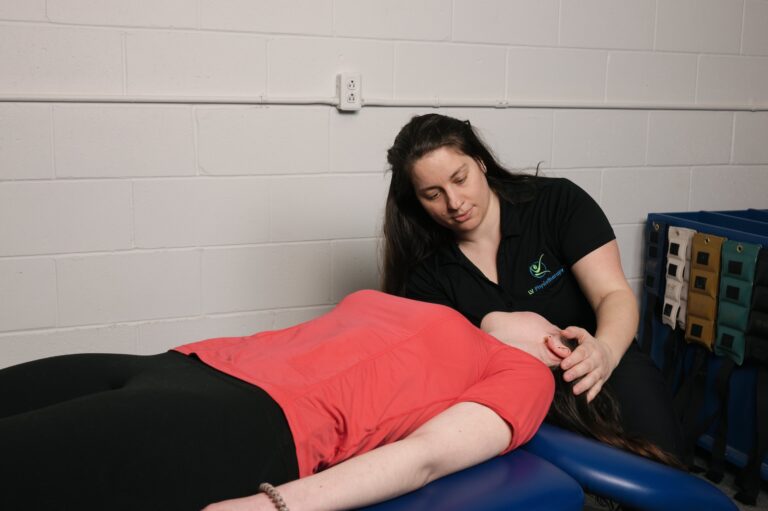
Physiotherapy can also help address muscle tension or joint stiffness that interferes with recovery and limits training consistency.
Protect Joint Health
Joint discomfort sometimes appears or worsens during perimenopause due to changes in connective tissue integrity. Targeted physiotherapy exercises help maintain mobility while building strength without excessive joint stress.
How Physiotherapy Supports Hormone Health and Strength
Physiotherapy is not just for injuries or acute pain. It can be extremely helpful during hormonal transitions when the body is adapting to new physiological conditions.
At LV Physiotherapy in St. Catharines, treatment during perimenopause often focuses on several key areas:
Movement Assessment
Understanding how your body currently moves allows physiotherapists to identify:
- Weak links in the kinetic chain
- Mobility restrictions that limit function
- Compensation patterns that increase injury risk
This assessment forms the foundation for creating an effective training program.
Strength and Stability Programs
Personalized programs help rebuild strength safely while protecting joints from excessive load. These programs account for:
- Current fitness levels
- Existing limitations or pain patterns
- Specific functional goals
Pain Management
If joint pain or stiffness is limiting your activity, physiotherapy treatments can help restore comfortable movement:
- Manual therapy to address tissue restrictions
- Exercise therapy targeting specific weaknesses
- Mobility training to improve joint range
Addressing pain allows you to maintain consistent training rather than reducing activity.
Education and Long Term Prevention
One of the most important goals is teaching you how to maintain strength and mobility long term without constant professional supervision. Small changes in exercise technique, training structure, and recovery practices often make significant differences in outcomes.
The Bigger Picture: Strength Is Still Within Reach
Perimenopause changes your physiology, but it does not eliminate your ability to build and maintain strength. In many cases, women actually develop better long term training habits during their 40s and 50s because they learn to train smarter rather than relying purely on intensity or volume.
By combining progressive strength training, mobility work, and personalized physiotherapy guidance, your body can remain strong and capable for years to come.
If you are noticing muscle loss, joint stiffness, or changes in strength and recovery, the team at LV Physiotherapy in St. Catharines can help you build a safe and effective plan tailored to your current needs and long term goals.