“Brace your core” gets said in nearly every gym, on nearly every heavy set, and it’s rarely explained beyond “tighten your abs.” That’s a shame, because core bracing is one of the more useful skills you can build for lifting and everyday movement, and understanding why it works makes it far easier to actually do it well. As we tell patients working through back pain, movement is medicine, and a well-built internal brace is what lets you load your spine with confidence instead of guesswork.
What Is Core Bracing, Really?
Core bracing means contracting your entire abdominal wall at once, your rectus abdominis, obliques, and deep core muscles firing together rather than one at a time, to create a rigid, stiff trunk. Think of it less as sucking in your stomach and more like tightening a weightlifting belt from the inside: 360 degrees of tension around your midsection, not just a flexed six-pack. Done well, bracing turns your trunk into a stable base that transfers force efficiently between your upper and lower body instead of losing it through a spine that bends and shifts under load.
Intra-Abdominal Pressure: The Internal Engine of a Good Brace
Muscular co-contraction is only half the picture. The other half is intra-abdominal pressure, and it’s not a separate technique so much as the internal mechanism that makes bracing effective under real load. When you take a breath in and brace against it, your diaphragm presses down, your abdominal wall pushes outward, and your pelvic floor responds to help contain that pressure. The result is a pressurized cylinder surrounding your spine, similar to how a sealed, full water bottle resists bending far better than an empty one. That pressure adds real stiffness on top of what your muscles are doing on their own, which is exactly why briefly holding your breath during a maximal lift isn’t a bad habit. It’s part of how a solid brace actually works.
Why This Matters: The Mechanics Behind a Stiffer Trunk
Your spine is a stack of individual vertebrae, which makes it a naturally unstable structure on its own, not unlike a tall stack of blocks or a flagpole without guy-wires. Left unsupported under load, that stack doesn’t fail evenly. It tends to buckle or shift at whichever segment is weakest or least controlled, concentrating stress in one spot rather than distributing it across your whole spine. Your trunk muscles function like those guy-wires, tensioning from multiple directions at once to keep every segment controlled rather than letting one point absorb all the force.
This is why experienced lifters brace harder and more deliberately as the load gets heavier or less predictable: more force moving through an unstable structure means more benefit from added stiffness. It’s worth being upfront that while this mechanical explanation is well established, the research on exactly how much bracing training reduces real-world injury rates is more mixed and still debated among researchers, so think of bracing as a tool that manages load intelligently rather than a guarantee against injury.
When Bracing Isn’t Necessary
A full brace has its place, but it isn’t a setting you should live in all day. Holding a maximal brace, or repeatedly holding your breath, through light daily tasks or light housework adds unnecessary muscular fatigue and unneeded strain on your blood pressure and pelvic floor. Save the full brace and breath-hold for the moments that actually call for it: heavy lifts, sudden loads, or anything that demands your spine be genuinely stiff for a few seconds. The rest of the time, your trunk should be able to move, breathe, and relax without you thinking about it.
Four Exercises to Build Functional Core Bracing
Bracing is easy to practice lying still on a mat and much harder to apply while you’re actually moving, which is why these exercises pair the skill with real movement patterns rather than isolating it.
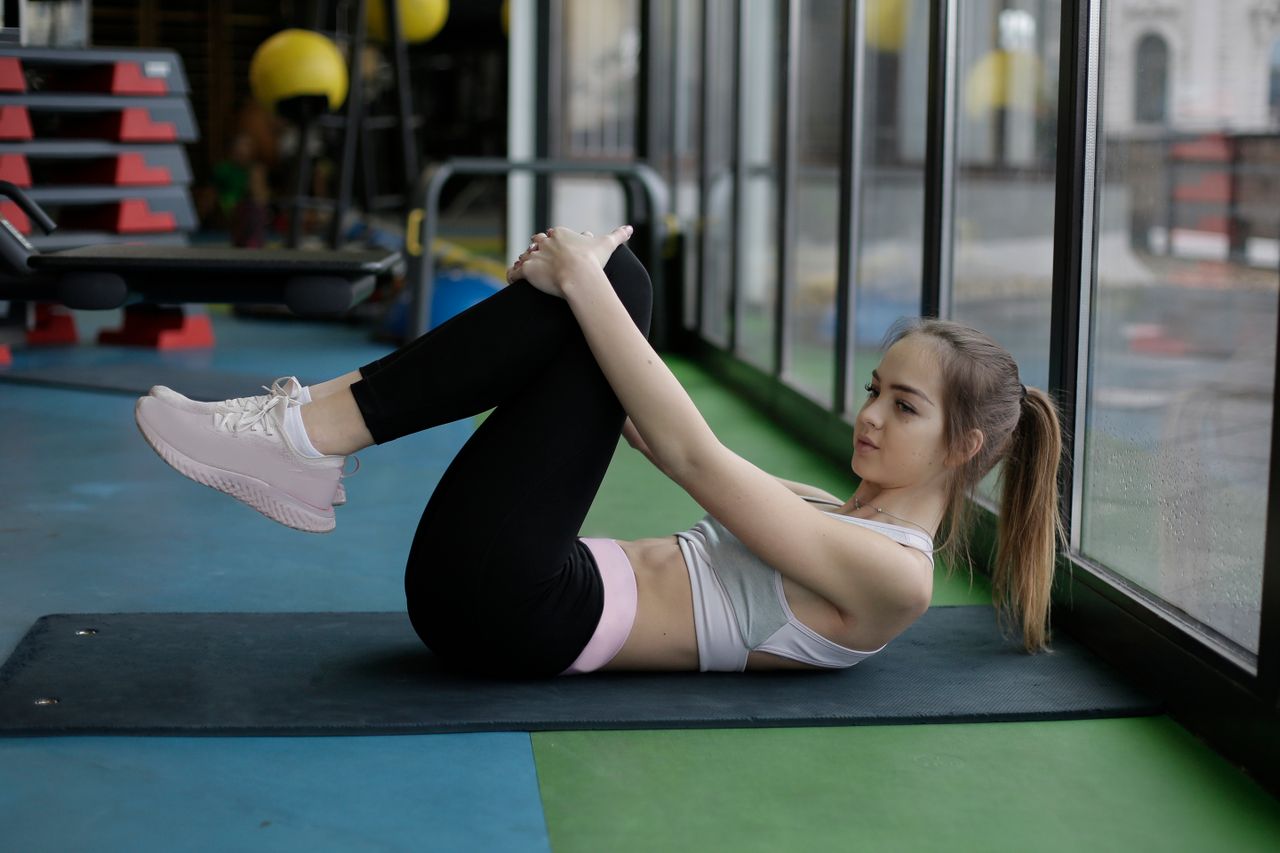
- Dead Bug with Loaded Breathing. Lying on your back with knees bent at 90 degrees, brace your core and extend one arm and the opposite leg away from you while keeping your low back flat against the floor. This teaches you to hold a brace while your limbs move independently, which is exactly what a stable trunk needs to do during almost any lift.
- Suitcase Carry. Hold a moderately heavy weight in one hand and walk for a set distance while keeping your trunk upright and level, resisting the pull toward the loaded side. This builds bracing specifically against side-bending, a demand that comes up constantly in daily carrying and lifting.
- Goblet Squat with a Pre-Brace Cue. Holding a weight at chest height, take a breath and brace fully before you begin the descent, maintaining that brace through the bottom of the squat and the drive back up. This trains bracing as something you set intentionally before a lift starts, not something you try to find halfway through.
- Pallof Press. Standing side-on to a cable or resistance band anchored at chest height, press the handle straight out in front of you while resisting the urge to rotate toward the anchor point. This is a direct test of anti-rotation bracing, which mirrors how your core actually gets challenged during twisting or asymmetrical lifting tasks.
Building a Brace You Can Actually Use
Core bracing isn’t about walking around tense all day. It’s a skill you deploy deliberately when the task calls for it, backed by an understanding of what your trunk is actually doing under load. At LV Physiotherapy in St. Catharines, we help patients and lifters build genuine bracing technique, not just a cue they’ve memorized, so their spine is genuinely supported through the lifts and movements that matter most to them. Reach out to our team to work on your bracing technique with some hands-on coaching.